

Traditional capture apps
Overlay-driven workflows focused on manual image completion.
Compare approaches
Most vehicle workflows still depend on fragmented imagery, inconsistent operator behavior, and disconnected visual context. Halo approaches capture differently — treating it as reusable operational infrastructure instead of isolated image collection. The difference is not only image quality. It is how capture behaves across merchandising, appraisal, fleet, inspection, transport, and operational workflows.
Operational proof
Capture architectures
Most vehicle capture systems optimize for image collection. Halo is designed to produce reusable operational context.
Overlay-driven workflows focused on manual image completion.
Human-led dealership or vendor photography workflows dependent on operator consistency.
Real-time guided capture infrastructure that produces synchronized imagery, evidence, metadata, and workflow context.
Operational comparison
Why it matters
When capture becomes inconsistent, every downstream workflow inherits the fragmentation.
Real-world operations
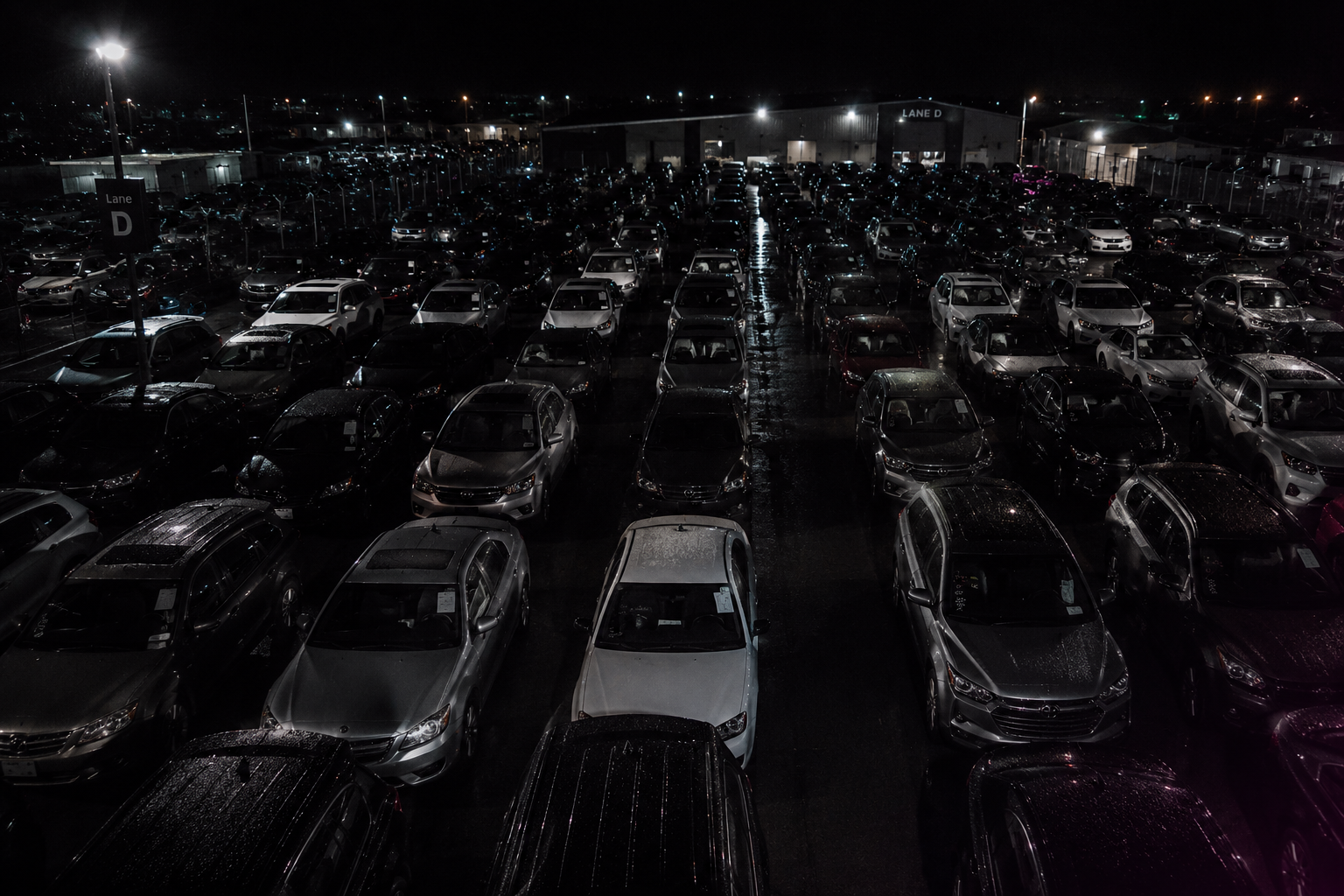
Most capture systems still assume ideal spacing, operator behavior, or dedicated capture environments. Halo was designed around real dealership lots, distributed fleet operations, and operational throughput.
Capture infrastructure
Halo helps operators create reusable visual context at the source so downstream workflows inherit cleaner operational inputs.